
Roman Catholic
St Sigismund parish
05-507 Słomczyn
85 Wiślana Str.
Konstancin deanery
Warsaw archdiocese, Poland

full list:
displayClick to display full list

searchClick to search full list by categories
wyświetlKliknij by wyświetlić pełną listę po polsku

szukajKliknij by przeszukać listę wg kategorii po polsku

Martyrology of the clergy — Poland
XX century (1914 – 1989)
personal data


religious status
Servant of God
surname
ZWOLIŃSKI
forename(s)
Joseph (pl. Józef)
religious forename(s)
Seraphim (pl. Serafin)
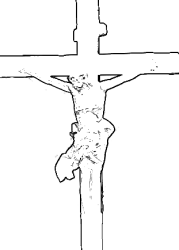
function
laybrother
creed
Latin (Roman Catholic) Church RCmore on
en.wikipedia.org
[access: 2014.09.21]
congregation
Congregation of Religious Brothers of the Third Order Regular of St. Francis Servants of the Poor CFAmore on
en.wikipedia.org
[access: 2013.05.19]
(i.e. Albertine Brothers)
date and place
of death
26.12.1940

KL Dachauconcentration camp
today: Dachau, Upper Bavaria reg., Bavaria state, Germany
more on
en.wikipedia.org
[access: 2016.05.30]
details of death
After German and Russian invasion of Poland in 09.1939 and start of the World War II, after start of German occupation, arrested by the Germans on 13.01.1940 during the raid on Kraków monastery.
Jailed in Montelupich in Kraków prison and Wiśnicz ZL Neu‐Wisnitz forced slave labor concentration camp in Nowy Wiśnicz.
Next on 20.06.1940 transported to KL Auschwitz concentration camp.
Finally, on 12.12.1940, transported to KL Dachau concentration camp.
One of the foremost experts on KL Dachau, Sr Stephanie A. Hayward OCD, wrote in her book about Blessed Stephen Vincent Frelichowski: „Concentration camps in human history were something previously unseen in such a form and on such a scale — something that had not existed before. Humanity had no experience in dealing with such evil; it lacked even the vocabulary to describe what was happening there, and human imagination was insufficient to fully grasp such things”. Quoted one of the prisoner at KL Dachau and KL Buchenwald, the Austrian Fr Conrad Just OCist: „There is no atrocity that did not occur in one of the concentration camps”. And added: „It can be said without exaggeration that what took place in the German concentration camps was absolute evil in all its manifestations”.
The first Catholic clergy became prisoners of KL Dachau as early as 1938. They were Austrians imprisoned following the Germ. Anschluss (Eng. annexation), i.e. the forced annexation of the Austrian state into the German Reich. In 09.1939, immediately after the outbreak of World War II, Catholic clergy from the Czech lands became victims of KL Dachau; they were transported there as part of Germ. Aktion Albrecht I (Eng. Operation Albrecht I), i.e. a campaign of arrests targeting individuals deemed potentially dangerous in the dict. Germ. Protektorat Böhmen und Mähren (Eng. Protectorate of Bohemia and Moravia), an administrative unit established by Germany on 16.03.1939, from the territories of Bohemia, Moravia, and Czech Silesia, occupied following the Munich Agreement of 30.09.1938 — and, in particular, Polish clergy.
Between 1939 and 1940, the Germans interned clergymen arrested in occupied Polish territories in numerous concentration camps, including KL Stutthof, KL Sachsenhausen, KL Buchenwald, KL Mauthausen–Gusen, KL Auschwitz. The Holy See intervened, demanding the release of the prisoners — among them several bishops — or their transfer to the German‐occupied and run quasi‐state called the Germ. Generalgouvernement (Eng. General Governorate), i.e. GG, or even permission for them to emigrate to a neutral European country or Latin America. In 06.1940 — at the time of the defeat of France — the Germans rejected these proposals, which had been presented by the Apostolic Nuncio in Berlin, Abp Cesare Orsenigo; they justified their refusal by citing the opinion of the Germ. Generalgouverneur der besetzten Gebiete Polens (Eng. Governor–General of the occupied Polish territories), i.e. GG Governor, a Doctor, you bet!, of Law (the supervisor of his doctoral dissertation, „The Public Legal Entity: A Contribution to the Doctrine of the Characteristics of Public Legal Personality”, was the renowned public law professor of Jewish descent, Walter Jellinek), and a prominent German National Socialist figure — regarding the „anti‐German stance of the Vatican press and radio”. In 11.1940, the Germans made different decision — endorsed by another prominent German National Socialist figure, Reichsführer‐SS Heinrich Luitpold Himmler. The executive order was issued by the head of the Germ. Reichssicherheitshauptamt (Eng. Reich Main Security Office), i.e. RSHA, SS‐Obergruppenführer Reinhard Tristan Eugen Heydrich. On 09.11.1940, in a letter from the Germ. Reichsministerium für die Kirchliche Angelegenheiten (Eng. Reich Ministry for Church Affairs) to Adolf Cardinal Bertram, the Archbishop of Wrocław, one of the paragraphs stated Germ. „Nach einer Entscheidung des Reichsführers SS und Chefs der Deutschen Polizei werden nunmehr sämtliche bisher in verschiedenen Konzentrationslagern untergebrachten Geistlichen im K.L. Dachau zusammengefaßt werden. Dort werden sie nur mit leichten Arbeiten beschäftigt. Auch wird ihnen Gelegenheit gegeben, täglich die Messe zu lesen oder zu besuchen” (Eng. „In accordance with the decision of the Reichsführer‐SS and Chief of the German Police, all clergy previously held in various concentration camps will now be gathered at the Dachau concentration camp. There, they will be assigned only light work. They will also be given the opportunity to celebrate or attend Holy Mass daily”). This measure was also to be applied to military chaplains, constituting a violation of the Hague Convention.
The decision resulted i.a. in the transfer — on 08.12.1940 — of c. 152 members of the clergy from the KL Mauthausen–Gusen concentration camp complex. Of these, 139 were definitively identified as Polish clergy. Fr Henry Malak, who arrived at the KL Dachau concentration camp a few days later from the KL Sachsenhausen camp, recalled: „The transports from Mauthausen and Gusen to Dachau presented a truly wretched sight. Our fellow priests from those camps were so terribly emaciated and ill that they looked more like shadows than human beings […] They were all priests, aged between 27 and their early forties. Looking at these hunched skeletons and gaunt faces — with sunken eyes gleaming with an unhealthy light — it was hard to hold back tears. Seeing what months of labor in the quarries had done to these young men, who, not long ago, had been in the prime of health”. A transport of c. 527 clergymen — c. 500 among them were Poles — who had been held at the KL Sachsenhausen concentration camp, arrived at KL Dachau on 14.12.1940. A day earlier, on 12‐13.12.1940, 68 Polish clergymen were brought from the KL Auschwitz concentration camp. In KL Dachau, at the gate bearing the inscription Germ. „Arbeit macht frei” (Eng. „Work sets you free”), they were greeted by one of the deputies to the Germ. Lagerkommandant (Eng. camp commandant), the notorious SS‐Sturmbannführer Alexander Bernhard Hans Piorkowski, with:
„You are in Dachau; no one leaves this place […] This is not a sanatorium. The only way out of here is through the chimney or in a coffin”….
All the clergymen were housed in three adjacent barracks — Nos. 26, 28, and 30. A few months later, on 26.03.1941, these barracks were enclosed with barbed wire, creating a sector that went down in history as the Germ. Priesterblöcke (Eng. priests' barracks), thereby isolating the clergy from the rest of the prisoners. Earlier, on 21.01.1941, a chapel had been set up in room No. 1 of barrack No. 26, where a Polish priest, Fr Paul Prabucki, celebrated Mass for his fellow clergymen every morning. The clergy were exempted from the most arduous physical labor, provided with breviaries, and granted extra food rations — such as wine, beer, and cocoa — though they were required, by order of the SS‐man present, to consume these in a single gulp.
Yet in German plans the Polish clergy — and throughout the entire period of operation of KL Dachau, they constituted the majority, c. 1,780 out of 2,720, of the imprisoned clergy — were to be treated separately. As early as 25.09.1939, Arthur Greiser — who would soon become the Germ. Gauleiter (Eng. district leader) of the ruling National Socialist German Workers' Party NSDAP and the Germ. Reichsstatthalter (Eng.Reich Governor) of the Germ. Reichsgau Wartheland (Eng. Warta Country Reich District) — stated that „all religiosity is contrary to common sense and cannot be reconciled with the NSDAP program”. Seeking to make the province under his jurisdiction a Germ. „Mustergau” (Eng. model district), made one of the pillars of his policy the tenet: Germ. „Ohne Gott, ohne Religion, ohne Priesters und Sakramenten” (Eng. „without God, without religion, without priest and sacrament”). In 1940, the preparation of the practical assumptions of this policy was led by a German Evangelical theologian, Germ. Regierungsrat (Eng. Government Counselor) and Germ. Kirchenreferent (Eng. Church Referent), Wilhelm Dudzus. On 10.07.1940, prob. at a party meeting in Munich, barely 17 km from KL Dachau, he revealed the „13 Points”, which were to become the basis of German policy in the Germ. Reichsgau Wartheland. Point 1 read: „There are no churches in the national sense, but only religious groups in the sense of associations”, and Dudzus added that „Churches cease to be corporations under public law”. In point 2, he informed that „There are no relations with groups outside the Germ. Reichsgau, nor any ties of a legal, financial, or service nature with the Reich Church”. And explained: „The churches of the Germ. Reichsgau Wartheland are to be independent” and that „The union of the Catholic Church with the Vatican will be dissolved”. And in point 12, it informed that „All religious institutions and monastic associations are subject to dissolution because they are contrary to the German concept of decency and nationality policy”. These postulate were subsequently implemented step by step, culminating in the decree issued on 13.09.1941 by the Germ. Gauleiter Arthur Greiser Germ. „Verordnung des Reichsstatthalters im Wartheland über religiöse Vereinigungen und Religionsgesellschaften im Reichsgau Wartheland” (Eng. „Regulation of the Reich Governor in Wartheland regarding religious associations and religious unions in Reichsgau Wartheland”). § 1.1 stated: „In the Germ. Reichsgau Wartheland […] [the three Churches and] the "Roman Catholic Church of German Nationality in the Wartheland" exist as legal entities under private law. They replace the legal entities of the Evangelical and Roman Catholic Churches that existed on September 1, 1939, in the Wartheland”. De facto, this meant the delegalization of the Roman Catholic Church, retroactively to 01.09.1939, the date of the German invasion of Poland. At the same time, § 6.1 sanctioned a racial policy towards religious denominations: „[…] a German may be a member of a religious association or society exclusively of German nationality. Poles may not be members of a religious association or society of German nationality”.
Thus it was no coincidence, that a few days later, on 18.09.1941, SS‐Hauptsturmführer (from 30.01.1942 SS‐Sturmbannführer) Egon Zill, the Germ. Schutzhaftlagerführer (Eng. camp leader), i.e. Germ. Lagerführer, and deputy to Germ. Lagerkommandant Piorkowski for prisoner affairs, assembled the Polish clergy for roll call. All prob. hailed from occupied Polish territories directly incorporated into the Reich — specifically the Germ. Reichsgau Wartheland, the Germ. Provinz Oberschlesien (Eng. Province of Upper Silesia), and the Germ. Reichsgau Danzig–Westpreußen (Eng. Reich District of Gdańsk ‐ Zachodnie Prusy). Zill proposed that they sign the Germ. Deutsche Volksliste (Eng. German National List), i.e. DVL, effectively demanding the renounciation of their Polish nationality. The „reward” for doing so was to be a transfer to Barrack No. 26 — where German clergymen were held and which contained a chapel — as well as the retention of certain „privileges”. All of them refused — though some sources suggest that two signed but subsequently withdrew their consent. The following day, 19.09.1941, Barrack No. 26 was physically cordoned off with barbed wire, and Polish clergymen were forbidden from entering it, including the chapel; their breviaries and religious objects were confiscated, and they were prohibited from reciting the rosary, making the sign of the cross, praying, reading the Bible, or hearing confessions. Not only were food privileges revoked, but standard camp rations were also drastically reduced. Furthermore, the prisoners were forced to perform the most grueling physical labor — including work in the fields of the Germ. Kräutergarten Dachau (Germ. Dachau Herb Garden), known as Germ. Die Plantage (Eng. The Plantation). There, according to Wikipedia, the Germans conducted experiments aimed at creating a „German folk medicine consistent with the nationalist and natural–historical concepts of National Socialist ideology”. That same source, citing the recollections of a former prisoner — the Czech historian Stanislav Zámečník — notes that „working conditions were murderous. The terrain was exceptionally unfavorable: the damp, heavy peat soil was unsuitable for growing herbs. It had to be turned over, drained, and de‐acidified. In rainy weather, the prisoners sank into the mud; in summer, they stood in the scorching sun, toiling on ground as hard as concrete”. And adds, „The land could have been plowed by two horses in a few days. Instead, the soil was dug up by hand with shovels”. And quotes Zámečník: „No one will forget how the prisoners returned to the camps in the evenings. Behind the column of exhausted, staggering people, there were always ten or more wheelbarrows filled with corpses and the dying”.
The situation was further exacerbated by overcrowding in the „Polish” barracks, Nos. 28 and 30 — for on 29.10.1941, a transport of c. 530 Polish priests arrived at KL Dachau, many of them elderly, who had been arrested, following the aforementioned decree by Germ. Gauleiter Greiser, primarily in the Germ. Reichsgau Wartheland. Only c. 80‐82 of them would survive KL Dachau. This deterioration was also a consequence of a secret decree issued on 27.08.1941, by Germ. Reichsführer‐SS Himmler, which ordered that Germ. „sämtliche hetzerische Pfaffen… und ähnliches Gesindelgrundsätzlich auf längere Zeit einem Konzentrationslager zugeführt werden sollen” (Eng. „all agitator–shavelings… and similar rabble should, as a rule, be sent to a concentration camp for an extended period”), while noting that „the Dachau concentration camp has been designated as the collection camp for all clergy held in Germ. die Schutzhaft (Eng. protective custody) or slated for such detention within the territory of the Reich, including the annexed and incorporated eastern territories”.
The Polish Institute of National Remembrance IPN reported that „Polish priests felt the ban on entering the chapel and the inability to receive Holy Communion extremely keenly — all the more so because German priests, fearing the chapel might be closed, initially refused to provide them with consecrated Hosts. This caused them understandable distress. Soon however, German and Czech priests were found who began sharing Holy Communion with them. It was most often distributed in the morning while the beds in the barracks were being made. Many priests carried hidden particles of the Host to their workplaces, where they distributed them to prisoners who felt the need to receive the Eucharistic Christ. Father Adam Kozłowiecki — who would later become the Archbishop of Lusaka — noted in his memoirs: "I have a tiny Vaseline tin in which I receive seven consecrated Particles, each measuring no more than 7×5 mm. I carry this little box with me at all times; I consume one daily and, when necessary, administer them to others"”.
An indescribable hunger prevailed, making it impossible to think of anything other than a single goal: how to obtain a piece of bread. A prisoner's weight often did not exceed 40 kg. And in 1942, the Germans reduced starvation rations even further. One former prisoner recalled: „Hunger that lasted not just a day, a month, or a year, but two, three, four, or more years. Hunger caused non‐healing wounds, dysentery, heart and kidney disease, the need to urinate up to 17 times a night, and unquenchable thirst — yet the fluids one drank could kill […] Blood turned to water, leading to edema and dropsy […] During an inspection by a German doctor — I was in the infirmary at the time due to a broken arm — the doctor patted my swollen belly and said, Germ. "Gut für die Arbeit" (Eng. "good for work"). However, the Germ. Stubendienst (Eng. barrack orderly) […] declared that it was not obesity but edema reaching the heart. To prove it, he took a long needle and pierced my abdomen; fluid spurted a meter high from the opening, spraying those standing nearby. Without that procedure, I would have died within a day or two”.
The camp authorities' de facto exclusion of Poles from the ranks of the Roman Catholic clergy also entailed an intensification of the camp regime. A particularly stark example of this was the „Bloody Holy Week” of 1942; after a few hundred dollars were found on one of the Polish priests, the Germans imposed a collective punishment on all the clergy held in barracks Nos. 28 and 30. From 28.03.1942 (the eve of Palm Sunday) until 06.04.1942 (Easter Monday), between the hours of 6:00 a.m.
and 6:00 p.m., the priests were forced to perform exhausting physical exercises. Were made to carry out these drills at a run across the roll‐call square, which was covered in mud and puddles — all while a cold, drizzling rain fell and a freezing wind blew from the nearby Alps. Those who collapsed from exhaustion were beaten, kicked, and trampled into the mud. During this time, a special detachment — composed of young Luxembourgish police officers who had been imprisoned for refusing to obey the German occupation authorities — ransacked the barracks, throwing everything out into the mud and onto the camp thoroughfare. Once the „exercises” concluded, the utterly exhausted men were forced to immediately restore their barracks to „order”. Fr Malak, mentioned earlier, described it as follows:
„— Ten days of non‐stop physical exertion! — came the punitive decree.
It was not until Monday, April 6, that we were finally dismissed from the parade ground […] Averaging 50 kilometers a day — comprising marching, running, jumping, hitting the ground, and running again — we covered roughly five hundred kilometers over those ten days. This was the very same route as the later foot–based evacuation transports, during which a great many prisoners perished. No fewer died from our own ranks during those days”. Perhaps to heighten the effect, the Germans — at that very same time — chose not to intervene when German priests from Barrack No. 26 organized clandestine, internal „literary lectures”….
C. 1,500 Polish priests were driven to a state of extreme exhaustion. As a result, many were deemed unfit for work and transferred to Barrack No. 29 — known as the Germ. Invalidenblock (Eng. Invalid Barracks) — from where, starting in late 1941, prisoners were transported to an unknown destination under the pretext of being moved to a „sanatorium”. It soon became clear that they were being taken away to be killed. Although the first priest involved in such a Germ. Invalidentransport (Eng. invalid transport) — in 01.1942 — was a German priest, the overwhelming majority of victims among the clergy, i.e. c. 92.5%, where Poles. From 05.1942 — barely a month after „Bloody Holy Week” — hundreds of Polish priests were transported to the Germ. Tötungsanstalt (Eng. Killing/Euthanasia Center) TA Hartheim and murdered in the gas chamber there, as part of the continuation of the genocidal German program known as Germ. «Aktion T4» and its extension, Germ. «Aktion 14 f 13» (Eng. „Operation 14 f 13”).
The year 1942 was the most tragic in the history of KL Dachau. Yet, against the backdrop of this unspeakable cruelty and criminality — with the Germans murdering c. 656 Polish clergymen during that time — a series of events unfolded at the highest levels of the German leadership that led to unexpected changes. First, the all‐powerful Germ. Lagerkommandant Alex Piorkowski, was dismissed from his post in late summer 1942 for „corrupt practices” (the aforementioned Germ. Lagerführer, Egon Zill, had already been transferred out in 12.1941). More importantly, however — given the scale of hostilities in the East, which had begun on 22.06.1941, with the German attack on their erstwhile allies, the Russians — Reichsführer‐SS Heinrich Himmler on 31.01.1942 established the Germ. SS‐Wirtschafts‐ und Verwaltungshauptamt (Eng. SS Main Economic and Administrative Office), i.e. SS‐WVHA. The SS‐WVHA was headed by SS‐bergruppenführer Oswald Pohl. Directly subordinate were e.g. Germ. die Konzentrationslager (Eng. concentration camps) and Germ. die Vernichtungslager (Eng. extermination camps) — including KL Dachau — which, from 03.1942, were administered by its Germ. Amtsgruppe D (Eng. Office Group D), a division that included the Germ. Inspektion der Konzentrationslager (Eng. Inspectorate of Concentration Camps). As the English‐language Wikipedia states: „In 1942, the WVHA's main remit was to expand the SS's contribution to the war effort by using forced labor in armaments manufacture and construction projects. Slave labour at the camps was part of the effort to maximize economic utility”.
On 30.04.1942, Oswald Pohl issued an order to all commandants of the niem.
die Konzentrationslager: „The camp commandant bears sole responsibility for the utilization of available labor. This utilization must — in the full sense of the word — lead to the total exhaustion of the [prisoner's] strength, so as to achieve the highest possible productivity […] Working hours are subject to no limitations […] Any circumstances that might result in a reduction of working time (e.g., meals, roll calls) must therefore be limited to the absolute minimum, beyond which no further reduction is possible”. However, the clergy held in Barrack No. 26 were exempt from this order; just nine days earlier, on 21.04.1942, the head of the Germ. Amtsgruppe D, SS‐Brigadeführer Richard Glücks — who reported directly to Oswald Pohl — had issued a circular mandating that „the Reichsführer‐SS and Chief of German Police has ordered that Polish and Lithuanian Germ. Pfaffen (Eng. shovellings) work properly, meaning they may be assigned to all types of labor. German, Dutch, and Norwegian clergy, etc., are, however, to continue being employed exclusively in the medicinal herb gardens”. Ergo — to use modern terminology — two fundamental changes occurred in the German approach to the prisoners' slave labor. Primo: the slaves were still to be subjected to extermination through labor, yet the principle of "maintenance" was to be applied — meaning the incurrence of minimal costs of operating and maintaining human resources — as opposed to killing through labor without incurring any costs for keeping the individuals alive. Secundo: the work performed had to make sense from the perspective of German National Socialist objectives.
Paradoxically, those criminal orders saved the lives of many Polish clergymen — although the Germ. die Invalidentransport (Eng. invalid transports) to the TA Hartheim continued until 12.1942 (German clergymen had been exempted from the Germ. Invalidenblock as early as 13.08.1942, following a protest by the family of one condemned man); although in 07.1942, Claus Karl Schilling — a „distinguished” German scientist and employee of the renowned Germ. Robert Koch‐Institut (Eng. Robert Koch Institute), as well as a professor, naturally!, at the even more renowned Germ. Friedrich–Wilhelms–Universität (Eng. Friedrich Wilhelm University) in Berlin, now Germ. Humboldt–Universität (Eng. Humboldt University) — began medical experiments in KL Dachau involving malaria, using e.g. 120 Polish clergymen as „guinea pigs”. A fellow prisoner, Fr Henry Malak, put it this way in his recollections: „A different wind is beginning to blow in the camp. We do not understand much of it, but we know for certain that […] being assigned to privileged work details might save us from annihilation. Each of us — provided two conditions are met: possessing sufficient physical strength and some vocational skill — now has the chance to get into a viable work detail, where there is a roof over one’s head and a food allowance is provided, and where work is not merely mindless rushing about designed to torment. One after another, men return to the barracks with excitement on their faces and news on their lips:
— I've got a work detail!”.
There perished.
According to the death certificate, issued in KL Dachau, the „honest” otherwise German „medical doctors” and formalists — and at the same time, unrivaled fairy tale spinners — noted that the cause of death was Germ. „Versagen von Herz und Kreislauf” (Eng. „Heart and circulatory failure”).
prisoner camp's numbers
22203Click to display source page (KL DachauClick to display the description), 837Click to display source page (KL AuschwitzClick to display the description)
cause of death
extermination: exhaustion and starvation
perpetrators
Germans
sites and events
KL DachauClick to display the description, KL AuschwitzClick to display the description, Regierungsbezirk KattowitzClick to display the description, ZL Neu‐WisnitzClick to display the description, Cracow (Montelupich)Click to display the description, «Intelligenzaktion»Click to display the description, GeneralgouvernementClick to display the description, Ribbentrop‐MolotovClick to display the description, Pius XI's encyclicalsClick to display the description
date and place
of birth
16.10.1879Birth certification on:
photos.szukajwarchiwach.gov.pl
[access: 2025.04.13]

Poskwitówtoday: Iwanowice gm., Kraków pov., Lesser Poland voiv., Poland
more on
en.wikipedia.org
[access: 2022.01.28]
parents
ZWOLIŃSKI John
🞲 ?, ? — 🕆 ?, ?

KURA Catherine
🞲 ?, ? — 🕆 ?, ?
baptism
18.10.1879Birth certification on:
photos.szukajwarchiwach.gov.pl
[access: 2025.04.13]

Iwanowicetoday: Iwanowice Włościańskie, Iwanowice gm., Kraków pov., Lesser Poland voiv., Poland
more on
en.wikipedia.org
[access: 2025.04.13]
Holy Trinity RC_church
religious vows
20.03.1934 (permanent)
positions held
till 1940
friar — Zakopanetoday: Zakopane urban gm., Tatra pov., Lesser Poland voiv., Poland
more on
en.wikipedia.org
[access: 2021.12.18] ⋄ Congregation's house („Hermitage”, at 2 Kalatówki Str.), Albertine Brothers CFA — fundraiser
master of novitiate — Zakopanetoday: Zakopane urban gm., Tatra pov., Lesser Poland voiv., Poland
more on
en.wikipedia.org
[access: 2021.12.18] ⋄ Congregation's house („Hermitage”, at 2 Kalatówki Str.), Albertine Brothers CFA
superior — Zakopanetoday: Zakopane urban gm., Tatra pov., Lesser Poland voiv., Poland
more on
en.wikipedia.org
[access: 2021.12.18] ⋄ Congregation's house („Hermitage”, at 2 Kalatówki Str.), Albertine Brothers CFA
from 28.08.1902
friar — Albertine Brothers CFA
others related
in death
PRZEWŁOKAClick to display biography Francis (Bro. Vitalis), WOLNIARSKIClick to display biography Joseph (Bro. Vincent)
sites and events
descriptions
KL Dachau: KL Dachau in German Bavaria, set up in 1933, became the main German Germ. Konzentrationslager (Eng. concentration camp) KL for Catholic priests and religious during World War II: On c. 09.11.1940, Reichsführer‐SS Heinrich Himmler, head of the SS, Gestapo and German police, as a result of the Vatican's intervention, decided to transfer all clergymen detained in various concentration camps to KL Dachau camp. The first major transports took place on 08.12.1940. In KL Dachau Germans held approx. 3,000 priests, including 1,800 Poles. The priests were forced to slave labor in the Germ. „Die Plantage” — the largest herb garden in Europe, managed by the genocidal SS, consisting of many greenhouses, laboratory buildings and arable land, where experiments with new natural medicines were conducted — for many hours, without breaks, without protective clothing, no food. They slaved in construction, e.g. of camp's crematorium. In the barracks ruled hunger, freezing cold in the winter and suffocating heat during the summer, especially acute in 1941‐1942. Prisoners suffered from bouts of illnesses, including tuberculosis. Many were victims of murderous „medical experiments” — in 11.1942 c. 20 were given phlegmon injections; in 07.1942 to 05.1944 c. 120 were used by for malaria experiments. More than 750 Polish clerics where murdered by the Germans, some brought to TA Hartheim euthanasia centre set up in Schloß Hartheim in Austria and murdered in gas chambers. At its peak KL Dachau concentration camps’ system had nearly 100 slave labour sub‐camps located throughout southern Germany and Austria. There were c. 32,000 documented deaths at the camp, and thousands perished without a trace. C. 10,000 of the 30,000 inmates were found sick at the time of liberation, on 29.04.1945, by the USA troops… (more on: www.kz-gedenkstaette-dachau.deClick to attempt to display webpage
[access: 2013.08.10], en.wikipedia.orgClick to attempt to display webpage
[access: 2016.05.30])
KL Auschwitz: German Germ. Konzentrationslager (Eng. concentration camp) KL and Germ. Vernichtungslager (Eng. extermination camp) VL Auschwitz was set up by Germans around 27.01.1940 n. Oświęcim, on the German territory (initially in Germ. Provinz Schlesien — Silesia Province; and from 1941 Germ. Provinz Oberschlesien — Upper Silesia Province). Initially mainly Poles were interned. From 1942 it became the centre for holocaust of European Jews. Part of the KL Auschwitz concentration camps’ complex was Germ. Vernichtungslager (Eng. extermination camp) VL Auschwitz II Birkenau, located not far away from the main camp. There Germans murdered likely in excess of million people, mainly Jews, in gas chambers. In KL Auschwitz alone, the Germans murdered c. 30,000 prisoners by lethal injection. Until 1941, people were killed by intravenous injections of concentrated hydrogen peroxide, ether, hydrogen peroxide, or gasoline. Later, an intracardiac injection was used — with a needle about 10 cm long — of 10‐15 ml of a 30% solution of phenol C6H5OH (acquired from the German concern IG Farben, or more precisely from its subsidiary Bayer, and still used by Bayer AG, among others, for the production of aspirin), which killed within 15 seconds. Altogether In excess of 400 priests and religious went through the KL Auschwitz, c. 40% of which were murdered (mainly Poles). (more on: en.auschwitz.org.plClick to attempt to display webpage
[access: 2012.11.23], www.meczennicy.pelplin.plClick to attempt to display webpage
[access: 2013.07.06])
Regierungsbezirk Kattowitz: After the Polish defeat in the 09.1939 campaign, which was the result of the Ribbentrop‐Molotov Pact and constituted the first stage of World War II, and the beginning of German occupation in part of Poland (in the other, eastern part of Poland, the Russian occupation began), the Germans divided the occupied Polish territory into five main regions (and a few smaller). The largest one was transformed into Germ. Generalgouvernement (Eng. General Governorate), intended exclusively for Poles and Jews and constituting part of the so‐called Germ. Großdeutschland (Eng. Greater Germany). From two separate new provinces were created. The two remaining were incorporated into existing German provinces. One of those was Polish Upper Silesia, which on 08.09.1939, by decree of the German leader Adolf Hitler (formally came into force on 26.10.1939), was incorporated into Germany as the Germ. Regierungsbezirk Kattowitz (Eng. Katowice Regency) and became part of the Germ. Provinz Schlesien (Eng. Province of Silesia) based in Wrocław. On 01.04.1940, the Germ. Regierungsbezirk Kattowitz was enlarged by several pre‐war German counties, and on 18.01.1941, a new German province was created, the Germ. Provinz Oberschlesien (Eng. Province of Upper Silesia), which, apart from the Germ. Regierungsbezirk Kattowitz, also included the Opole region. From 26.10.1939, when the regency was established, the law of the German state was in force there, the same as in Berlin. The main axis of the policy of the new regency, the territory of which the Germans recognized as the Germ. „Ursprünglich Deutsche” (Eng. „natively German”), despite the fact only 6% of its pre–war Polish part were Germans, was Germ. „Entpolonisierung” (Eng. „Depolonisation”), i.e. forced Germanization. The main mechanism was the introduction of the Germ. Deutsche Volksliste DVL, a German nationality list that was supposed to specify the national affiliation of the inhabitants of the region. The largest group marked in the compulsory registrations was Group 3, people who identified themselves as „Silesians” (in 1943 about 41%), and people remaining outside the DVL (about 36%). The latter group was intended to be deported to the Germ. Generalgouvernement (which did not happen en masse because German industry needed slave labor). Group 3, considered by the Germans as capable of Germanization, was subject to certain legal restrictions, and was subject to, among others, to conscription into the German Wehrmacht army. Children could only learn in German. A policy of terror was pursued against the Polish population. There was a special police court, controlled by the Germ. Geheime Staatspolizei (Eng. Secret State Police), i.e. the Gestapo, before which c. 4,000‐5,000 people were detained. For the years 1942‐1945 over 2,000 of them were verified, of which 1,890 were sentenced to death, including 286 in public executions. Thousands of people were murdered during the so‐called «Intelligenzaktion Schlesien», including 300‐650 Polish teachers and c. 61 Polish Catholic priests. The regency hosted a German concentration and extermination camp KL Auschwitz, where the Germans imprisoned c. 1,100,000 Jews (murdering c.1,000,000, i.e. c. 90% of them) and c. 140,000 Poles (murdering c. 70,000, i.e. c. 50% of them). After the end of hostilities of World War II, the overseer of this province, the Germ. Reichsstatthalter (Eng. Reich Governor) and the Germ. Gauleiter (Eng. district head) of the German National Socialist Party, Fritz Brecht, committed suicide. (more on: en.wikipedia.orgClick to attempt to display webpage
[access: 2024.06.24])
ZL Neu‐Wisnitz: After the Germans occupied Nowy Wiśnicz near Bochnia on 07.09.1939, the local penitentiary, established in c. 1783, after the First Partition of Poland by the Austrian Emperor, Joseph II Habsburg in the former monastery of the Discalced Carmelites, was transformed into a POW camp. By 15.12.1939, all POWs were sent to other camps. At that time, the Germans established the Germ. Zwangsarbeitslager (Eng. forced labor camp) / Germ. Zivilinternierungslager (Eng. transit camp for civilians) ZL Neu‐Wisnitz — administratively already located in the German–run occupational entity of the Germ. Generalgouvernement (Eng. General Governorate) — where it was intended to hold Poles arrested as part of the «Intelligenzaktion», an action to exterminate the Polish leadership, political and social activists, and representatives of the Polish intelligentsia. The first transport of c. 100 prisoners from Kraków was brought to the camp on 23.12.1939. It has not been possible to determine exactly how many such transports arrived at ZL Neu‐Wisnitz. Prisoners, organized in Germ. Kommando (Eng. work unit), slaved from dawn till dusk in the weaving mill, locksmith's shop, carpentry shop, laundry, camp kitchen, burying the dead. The inmates were harassed, beaten with bullwhips, hit with fists and boots, kicked, insulted, forced to stand for hours on the roll call square with raised hands, to „gymnastic exercises”. On 05.06.1940, in retaliation for a prisoner's escape, the Germans shot 10 „hostages” — fellow prisoners. On 20.06.1940 267 prisoners were transported to the new concentration camp KL Auschwitz, the formation of which was beginning. ZL Neu‐Wisnitz was liquidated and on 01.07.1940 in its place began to operate the heavy prison DZ Neu‐Wisnitz. (more on: www.sw.gov.plClick to attempt to display webpage
[access: 2025.02.18])
Cracow (Montelupich): Cracow penal prison, during occupation run by the Germans — from 28.02.1941 by Germ. Geheime Staatspolizei (Eng. Secret State Police, known as Gestapo. In 1940‐1944 Germans jailed there approx. 50,000 prisoners, mainly Poles and Jews. Some of them were transported to KL Auschwitz concentration camp, some were executed. After cease in war effort the prison was used by UB — a Polish unit of Russian NKVD — as a prison for Polish independence resistance fighters, some of which were subsequently sent to prisons and slave labour camps in Russia. (more on: en.wikipedia.orgClick to attempt to display webpage
[access: 2014.10.31])
«Intelligenzaktion»: German: «Intelligenzaktion» (English: „Intelligence Action”) — a German program of extermination of the Polish elite, mainly the intelligentsia and leadership layers, carried out from the beginning of the occupation in w 09.1939 to 04.1940, mainly in territories directly annexed to Germany, but also in the so‐called Germ. Generalgouvernement (Eng. General Governorate), where it was called «AB‐aktion». In the first phase, immediately after the beginning of the German occupation, during military operations carried out by the Germ. Wehrmacht (Eng. Armed Forces) and the genocidal units of the Germ. Einsatzgruppen (Eng. Operational Groups) of the Germ. Sicherheitspolizei (Eng. Security Police), i.e. SiPo, and Germ. Sicherheitsdienst des Reichsführers SS (Eng. Security Service of the Reichsführer SS), i.e. SD, organized by the Germ. Reichssicherheitshauptamt (Eng. Reich Main Security Office), i.e. RSHA, which followed the troops, carried out under the Germ. Unternehmen „Tannenberg” (Eng. Operation „Tannenberg”) — based on the so‐called Germ. Sonderfahndungsliste (Eng. Special Wanted Lists), i.e. proscription lists of Poles considered particularly dangerous to the Third Reich, prepared by the Zentralstelle II/P (Polen) unit of the German RSHA. Later, implemented by the German civilian occupation authorities and the genocidal unit of the Germ. Volksdeutscher Selbstschutz (Eng. Ethnic Germans Self‐Defense), whose members were Germ. Volksdeutsche (Eng. Ethnic Germans), i.e. representatives of the German minority in Poland. According to various sources, these lists, at the beginning of 09.1939, could have contained the details of 61,000—88,000 „dangerous” Poles — although these figures cannot be confirmed. In total, during this genocide, c. 50,000 teachers, Catholic priests, representatives of the landed gentry, freelancers, social and political activists, and retired military personnel were systematically and methodically murdered. Another 50,000 were sent to concentration camps, where only a negligible percentage survived. (more on: en.wikipedia.orgClick to attempt to display webpage
[access: 2014.10.04])
Generalgouvernement: After the Polish defeat in the 09.1939 campaign, which was the result of the Ribbentrop‐Molotov Pact and constituted the first stage of World War II, and the beginning of German occupation in part of Poland (in the other, eastern part of Poland, the Russian occupation began), the Germans divided the occupied Polish territory into five main regions. In two of them new German provinces were created, two other were incorporated into other provinces. However, the fifth part was treated separately, and in a political sense it was supposed to recreate the German idea from 1915 (during World War I, after the defeat of the Russians in the Battle of Gorlice in 05.1915) of creating a Polish enclave within Germany. Illegal in the sense of international law, i.e. Hague Convention, and public law, managed by the Germans according to separate laws — especially established for the Polish Germ. Untermenschen (Eng. subhumans) — till the Russian offensive in 1945 it constituted part of the Germ. Großdeutschland (Eng. Greater Germany). Till 31.07.1940 formally called Germ. Generalgouvernement für die besetzten polnischen Gebiete (Eng. General Government for the occupied Polish lands) — later simply Germ. Generalgouvernement (Eng. General Governorate), as in the years 1915‐1918. From 07.1941, i.e. after the German attack on 22.06.1941 against the erstwhile ally, the Russians, it also included the Galicia district, i.e. the Polish pre‐war south‐eastern voivodeships. A special criminal law was enacted and applied to Poles and Jews, allowing for the arbitrary administration of the death penalty regardless of the age of the „perpetrator”, and sanctioning the use of collective responsibility. After the end of the military conflict of the World War UU, the government of the Germ. Generalgouvernement was recognized as a criminal organization, and its leader, governor Hans Frank, guilty of war crimes and crimes against humanity and executed. (more on: en.wikipedia.orgClick to attempt to display webpage
[access: 2024.12.13])
Ribbentrop‐Molotov: Genocidal Russian‐German alliance pact between Russian leader Joseph Stalin and German leader Adolf Hitler signed on 23.08.1939 in Moscow by respective foreign ministers, Mr. Vyacheslav Molotov for Russia and Joachim von Ribbentrop for Germany. The pact sanctioned and was the direct cause of joint Russian and German invasion of Poland and the outbreak of the World War II in 09.1939. In a political sense, the pact was an attempt to restore the status quo ante before 1914, with one exception, namely the „commercial” exchange of the so‐called „Kingdom of Poland”, which in 1914 was part of the Russian Empire, fore Eastern Galicia (today's western Ukraine), in 1914 belonging to the Austro‐Hungarian Empire. Galicia, including Lviv, was to be taken over by the Russians, the „Kingdom of Poland” — under the name of the General Governorate — Germany. The resultant „war was one of the greatest calamities and dramas of humanity in history, for two atheistic and anti‐Christian ideologies — national and international socialism — rejected God and His fifth Decalogue commandment: Thou shall not kill!” (Abp Stanislav Gądecki, 01.09.2019). The decisions taken — backed up by the betrayal of the formal allies of Poland, France and Germany, which on 12.09.1939, at a joint conference in Abbeville, decided not to provide aid to attacked Poland and not to take military action against Germany (a clear breach of treaty obligations with Poland) — were on 28.09.1939 slightly altered and made more precise when a treaty on „German‐Russian boundaries and friendship” was agreed by the same murderous signatories. One of its findings was establishment of spheres of influence in Central and Eastern Europe and in consequence IV partition of Poland. In one of its secret annexes agreed, that: „the Signatories will not tolerate on its respective territories any Polish propaganda that affects the territory of the other Side. On their respective territories they will suppress all such propaganda and inform each other of the measures taken to accomplish it”. The agreements resulted in a series of meeting between two genocidal organization representing both sides — German Gestapo and Russian NKVD when coordination of efforts to exterminate Polish intelligentsia and Polish leading classes (in Germany called «Intelligenzaktion», in Russia took the form of Katyń massacres) where discussed. Resulted in deaths of hundreds of thousands of Polish intelligentsia, including thousands of priests presented here, and tens of millions of ordinary people,. The results of this Russian‐German pact lasted till 1989 and are still in evidence even today. (more on: en.wikipedia.orgClick to attempt to display webpage
[access: 2015.09.30])
Pius XI's encyclicals: Facing the creation of two totalitarian systems in Europe, which seemed to compete with each other, though there were more similarities than contradictions between them, Pope Pius XI issued in 03.1937 (within 5 days) two encyclicals. In the „Mit brennender Sorge” (Eng. „With Burning Concern”) published on 14.03.1938, condemned the national socialism prevailing in Germany. The Pope wrote: „Whoever, following the old Germanic‐pre‐Christian beliefs, puts various impersonal fate in the place of a personal God, denies the wisdom of God and Providence […], whoever exalts earthly values: race or nation, or state, or state system, representatives of state power or other fundamental values of human society, […] and makes them the highest standard of all values, including religious ones, and idolizes them, this one […] is far from true faith in God and from a worldview corresponding to such faith”. On 19.03.1937, published „Divini Redemptoris” (Eng. „Divine Redeemer”), in which criticized Russian communism, dialectical materialism and the class struggle theory. The Pope wrote: „Communism deprives man of freedom, and therefore the spiritual basis of all life norms. It deprives the human person of all his dignity and any moral support with which he could resist the onslaught of blind passions […] This is the new gospel that Bolshevik and godless communism preaches as a message of salvation and redemption of humanity”… Pius XI demanded that the established human law be subjected to the natural law of God , recommended the implementation of the ideal of a Christian state and society, and called on Catholics to resist. Two years later, National Socialist Germany and Communist Russia came together and started World War II. (more on: www.vatican.vaClick to attempt to display webpage
[access: 2023.05.28], www.vatican.vaClick to attempt to display webpage
[access: 2023.05.28])
sources
personal:
www.albertyni.opoka.org.plClick to attempt to display webpage
[access: 2012.12.28], pl.wikipedia.orgClick to attempt to display webpage
[access: 2012.12.28], www.ipgs.usClick to attempt to display webpage
[access: 2012.12.28], photos.szukajwarchiwach.gov.plClick to attempt to display webpage
[access: 2025.04.13], www.hagiographycircle.comClick to attempt to display webpage
[access: 2012.11.23]
bibliographical:
„A martyrology of Polish clergy under German occupation, 1939‐1945”, Fr Szołdrski Vladislaus CSSR, Rome 1965
Arolsen Archives, International Tracing Service (ITS), Bad Arolsen, GermanyClick to display source page
original images:
newsaints.faithweb.comClick to attempt to display webpage
[access: 2012.11.23], www.albertyni.opoka.org.plClick to attempt to display webpage
[access: 2012.12.28]
LETTER to CUSTODIAN/ADMINISTRATOR
If you have an Email client on your communicator/computer — such as Mozilla Thunderbird, Windows Mail or Microsoft Outlook, described at WikipediaPatrz:
en.wikipedia.org, among others — try the link below, please:
LETTER to CUSTODIAN/ADMINISTRATORClick and try to call your own Email client
If however you do not run such a client or the above link is not active please send an email to the Custodian/Administrator using your account — in your customary email/correspondence engine — at the following address:

giving the following as the subject:
MARTYROLOGY: ZWOLIŃSKI Joseph
To return to the biography press below: