
Roman Catholic
St Sigismund parish
05-507 Słomczyn
85 Wiślana Str.
Konstancin deanery
Warsaw archdiocese, Poland




full list:
displayClick to display full list

searchClick to search full list by categories
wyświetlKliknij by wyświetlić pełną listę po polsku

szukajKliknij by przeszukać listę wg kategorii po polsku

Martyrology of the clergy — Poland
XX century (1914 – 1989)
personal data
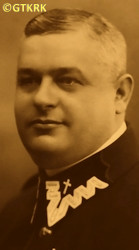
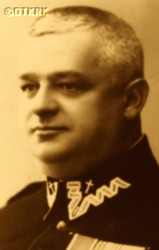
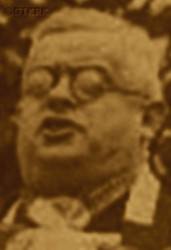
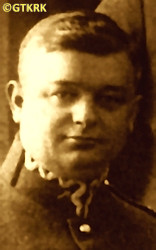
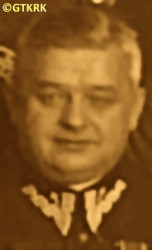
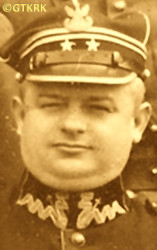
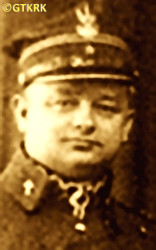
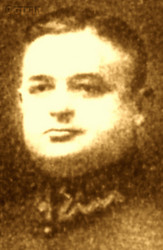
surname
SZYŁKIEWICZ
forename(s)
Victor (pl. Wiktor)
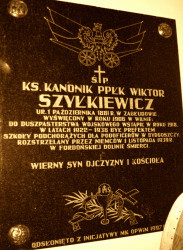
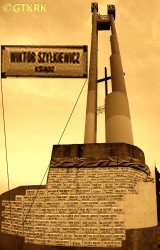
function
diocesan priest
creed
Latin (Roman Catholic) Church RCmore on
en.wikipedia.org
[access: 2014.09.21]
diocese / province
Vilnius archdiocesemore on
en.wikipedia.org
[access: 2013.05.19]
Gniezno and Poznań archdiocese (aeque principaliter)more on
www.archpoznan.pl
[access: 2012.11.23]
Vilnius diocesemore on
en.wikipedia.org
[access: 2013.05.19]
RC Military Ordinariate of Polandmore on
en.wikipedia.org
[access: 2014.12.20]
honorary titles
War Order of Virtuti Militari — Silver (5th Class)more on
en.wikipedia.org
[access: 2019.10.13]
(1923)
Silver „Cross of Merit”more on
en.wikipedia.org
[access: 2019.04.16]
(16.07.1925)
Commemorative Medal for War of 1918–21more on
pl.wikipedia.org
[access: 2019.10.13]
Ten Years of Independence Medalmore on
pl.wikipedia.org
[access: 2019.10.13]
„For Long Service” medal — bronzemore on
en.wikipedia.org
[access: 2020.05.25]
date and place
of death
01.11.1939

Fordontoday: district of Bydgoszcz, Bydgoszcz city pov., Kuyavia‐Pomerania voiv., Poland
more on
en.wikipedia.org
[access: 2021.09.02]
alt. dates and places
of death
09.09.1939
Gdański foresttoday: part of Bydgoszzcz, Bydgoszcz city pov., Kuyavia‐Pomerania voiv., Poland
more on
en.wikipedia.org
[access: 2021.06.20]
details of death
In 1907‐1908, organized material aid in Vilnius for workers sent in for forced labor for their participation in the 1907 fighting of workers' militias — nationalist and communist — in Łódź, partly inspired by the Russian occupiers, in which c. 322 people died, when Russian police remain inactive throughout.
In 1908‐1912, ran and maintained at his own expense a clandestine Polish school for c. 80 children, securing its operation by paying off Russian policemen.
For publishing an article about the murder of Russian Prime Minister Pyotr Stolypin on 18.09.1911, in the „Morning Newspaper 2 Grosze”, repressed by the Russian tsarist authorities. On 11.02.1912, in a trial before the Judicial Chamber in Vilnius, sentenced to a fine of 500 rubles. Also banned from working as an editor, from publishing articles for the press, and ordered to suspend publication of the „Newspaper”. At the same time, the Russian Minister of Internal Affairs, Alexander Makarov, issued a decree depriving him of the right to hold public church offices for an indefinite period.
Left for Munich, Germany, where continued his art studies. Returned to his Vilnius diocese in 1914, just before the outbreak of World War I (or in 1917, after the German occupation began, as a result of the Battle of Gorlice in 03.1915).
In 1917, in an attempt to counteract the German action of inciting the Belarusian population against Poles, co‐organized a petition to the Polish Regency Council, the formal body of the supreme authority of the so‐called Germ. Königreich Polen (Eng. Polish Kingdom), established by the Central Powers (German Empire and Austria–Hungary) on the territory of the former Rus. Царство Польское (Eng. Polish Kingdom) after the Russian invader was ousted and the German occupation of central Poland began — the actual administrator was the German Governor–General of Warsaw, Hans Hartwig von Beseler — with a request to annex the Polish Borderlands regions, including the Vilnius region, to Germ. Königreich Polen. After the courier carrying the petition to Warsaw was captured, was to be brought before a German court martial in the parish of Svislach. A separatist peace treaty signed on 03.03.1918 in Brest by the Central Powers and Bolshevik Russia, and the amnesty issued in connection with the treaty interrupted the proceedings.
After the abdication on 09.11.1918 of the German Emperor William II Hohenzollern; after the signing on 11.11.1918, by the Allies and the Germans, in a staff carriage in Compiègne, at the headquarters of French Marshal Ferdinand Foch, of the armistice and ceasefire — which de facto meant the end of World War I; and also after on 11.11.1918, the Regency Council handed over supreme command over the army to Brigadier Joseph Piłsudski and appointed him Commander‐in‐Chief of the Polish Army, which de facto meant the rebirth of the Polish state, covering however only Germ. Königreich Poland and excluding the Vilnius Region, which still formally remained under German control, as part of Germ. Gebiet des Oberbefehlshabers Ost (Eng. the Commander‐in‐Chief of the East Area), i.e. Ober‐Ost, attempted to organize in 11.1918 an action to disarm the Germ. Landwehr (Eng. Home Defense) company stationed in Svislach. The action failed, and therefore the so‐called Germ. Soldatenrat (Eng. Soldiers' Council) in Svislach — one of the ad‐hoc units of administrative power organized in Germany after the fall of the Empire — intended to bring him to trial before a summary court, which carried the death penalty. Having been warned, fled to the Białowieża Forest.
In 12.1918, reached his home village of Zabłudów, near Białystok, where hid and helped the local priest while recruiting volunteers for the new Lithuanian–Belarusian Division, organized in free Poland (Zabłudów was still part of the German Ober‐Ost), pursuant to Joseph Piłsudski's decision of 26.11.1918. Also purchased ammunition and military equipment from demoralized German soldiers.
On 19.02.1919, the Polish Army entered Zabłudów and Białystok, and the entire region was incorporated into the independent Polish state.
On 12.04.1920, as the decisive battle in the Polish–Russian War of 1919‐1921 was fast approaching, voluntarily joined the Polish Army. Was posted to the Central Camp of Non‐Commissioned Officer Artillery Schools in Toruń. On 11.08.1920, as the great Russian offensive approached central Poland, appointed chaplain of the Officers' School for Non‐Commissioned Officers in Bydgoszcz. Was there, ministering to the training NCOs, during the decisive Battle of Warsaw, known as the „Miracle on the Vistula”, in 08.1920, and the triumph of the Polish army.
After the end of the Polish–Russian War, remained in the Polish Army as a military chaplain.
After German and Russian invasion of Poland in 09.1939 and start of the World War II, after start of German occupation, arrested by the Germans on 05(15).10.1939 in Bydgoszcz — as part of «Intelligenzaktion» — among hundreds of Polish intelligentsia representatives, including teachers, from Bydgoszcz and vicinity.
Jailed in IL Bromberg internment camp (in artillery barracks) in Bydgoszcz.
Murdered in a mass execution, in the forests near the glider airport near Fordon — during the exhumation in 1947, 307 bodies were found at the murder site — prob. in 10/11.1939.
cause of death
mass murder
perpetrators
Germans
sites and events
FordonClick to display the description, Gdański forestClick to display the description, IL BrombergClick to display the description, «Intelligenzaktion»Click to display the description, Reichsgau Danzig‐WestpreußenClick to display the description, Ribbentrop‐MolotovClick to display the description, Pius XI's encyclicalsClick to display the description, Polish‐Russian war of 1919‐1921Click to display the description
date and place
of birth
01.10.1881

Zabłudówtoday: Zabłudów gm., Białystok pov., Podlaskie voiv., Poland
more on
en.wikipedia.org
[access: 2021.07.18]
alt. dates and places
of birth
18.09.1881
parents
SZYŁKIEWICZ Joseph
🞲 ?, ? — 🕆 ?, ?

WASILEWSKA Victoria
🞲 ?, ? — 🕆 ?, ?
presbyter (holy orders)
ordination
16.06.1906

positions held
1922 – 1939
resident — BydgoszczBielawy neighborhood
today: Bydgoszcz city pov., Kuyavia‐Pomerania voiv., Poland
more on
en.wikipedia.org
[access: 2021.06.20] ⋄ St Vincent de Paul RC parish ⋄ Bydgoszcz‐citydeanery name
today: Bydgoszcz city pov., Kuyavia‐Pomerania voiv., Poland
more on
en.wikipedia.org
[access: 2021.06.20] RC deanery — also: prefect of gymnasium for women (periodically)
1922 – 1939
RC military pastor — Bydgoszcztoday: Bydgoszcz city pov., Kuyavia‐Pomerania voiv., Poland
more on
en.wikipedia.org
[access: 2021.06.20] ⋄ garrison, Corps District OK No. VIII Toruń, Polish Armed Forces ⋄ Blessed Virgin Mary Queen of Peace RC church ⋄ St George the Martyr RC military parish ⋄ Toruńname/seat of military deanery
today: Toruń city pov., Kuyavia‐Pomerania voiv., Poland
more on
en.wikipedia.org
[access: 2021.06.20] RC deanery — by decree of the Chief of State of 03.05.1922, confirmed with seniority from 01.06.1919 and 12th place on the list of Roman Catholic military pastors, in the rank of lieutenant colonel; by decree No. L. 3448 of the Commander‐in‐Chief of 16.12.1921, verified with seniority from 01.04.1920 and 13th place on the list of Roman Catholic military pastors, in the rank of lieutenant colonel; also: administrator of the military parish; retired in 1938
1922 – 1938
professor — Bydgoszcztoday: Bydgoszcz city pov., Kuyavia‐Pomerania voiv., Poland
more on
en.wikipedia.org
[access: 2021.06.20] ⋄ Cadet School for NCOs (till 1927 Officers' School for Non‐Commissioned Officers), Polish Armed Forces — also: prefect and chaplain
1934 – 1936
prefect — Bydgoszcztoday: Bydgoszcz city pov., Kuyavia‐Pomerania voiv., Poland
more on
en.wikipedia.org
[access: 2021.06.20] ⋄ Aviation Cadet School – Technical Group, Polish Armed Forces — also: chaplain
10.1920 – c. 1922
RC military chaplain — Toruńtoday: Toruń city pov., Kuyavia‐Pomerania voiv., Poland
more on
en.wikipedia.org
[access: 2021.06.20] ⋄ garrison, Corps District OK No. VIII Toruń, Polish Armed Forces ⋄ St Catherine of Alexandria RC military parish ⋄ Toruńname/seat of military deanery
today: Toruń city pov., Kuyavia‐Pomerania voiv., Poland
more on
en.wikipedia.org
[access: 2021.06.20] RC deanery — after the Polish Army transitioned on 22.08.1921 to peacetime deployment, the entire artillery education was concentrated in Toruń — from 02.1920 the Central Camp of Non‐Commissioned Officers' Artillery Schools operated there; from 04.1920 the Permanent Artillery Course together with the Artillery Training Group; from 07.1921 the Staff of Artillery Measurement Units; from autumn 1921 the School of Junior Artillery Officers; from 01.1920 the Artillery School Camp; also: administrator of the military parish
12.04.1920
RC military chaplain — Polish Armed Forces — formally accepted into the Polish Army as a chaplain by L. 2238 decree of the Commander‐in‐Chief of 30.07.1920
1919 – 1920
parish priest — Krypnotoday: Krypno Kościelne, Krypno gm., Mońki pov., Podlaskie voiv., Poland
more on
en.wikipedia.org
[access: 2021.12.18] ⋄ Nativity of the Blessed Virgin Mary RC parish ⋄ Knyszyntoday: Knyszyn gm., Mońki pov., Podlaskie voiv., Poland
more on
en.wikipedia.org
[access: 2022.01.06] RC deanery
1917 – 1919
administrator — Svislachtoday: Svislach dist., Grodno reg., Belarus
more on
en.wikipedia.org
[access: 2021.09.29] ⋄ Holy Trinity RC parish ⋄ Vawkavysktoday: Vawkavysk dist., Grodno reg., Belarus
more on
en.wikipedia.org
[access: 2022.01.06] RC deanery
1914 – 1917
vicar — Svislachtoday: Svislach dist., Grodno reg., Belarus
more on
en.wikipedia.org
[access: 2021.09.29] ⋄ Holy Trinity RC parish ⋄ Vawkavysktoday: Vawkavysk dist., Grodno reg., Belarus
more on
en.wikipedia.org
[access: 2022.01.06] RC deanery — prob.
1912 – 1914
student — Munichtoday: Bavaria state, Germany
more on
en.wikipedia.org
[access: 2022.04.12] ⋄ art studies (painting)
1910 – 1912
vicar — Vilniustoday: Vilnius city dist., Vilnius Cou., Lithuania
more on
en.wikipedia.org
[access: 2022.01.06] ⋄ Holy Spirit RC parish ⋄ Vilniustoday: Vilnius city dist., Vilnius Cou., Lithuania
more on
en.wikipedia.org
[access: 2022.01.06] RC deanery — also: prefect of elementary schools; publisher and editor of the „Morning Newspaper 2 Grosze” daily
1909 – 1910
vicar — Vilniustoday: Vilnius city dist., Vilnius Cou., Lithuania
more on
en.wikipedia.org
[access: 2022.01.06] ⋄ All the Saints RC parish ⋄ Vilniustoday: Vilnius city dist., Vilnius Cou., Lithuania
more on
en.wikipedia.org
[access: 2022.01.06] RC deanery — also: prefect of elementary schools
1906 – 1909
vicar — Vilniustoday: Vilnius city dist., Vilnius Cou., Lithuania
more on
en.wikipedia.org
[access: 2022.01.06] ⋄ St Peter and St Paul the Apostles RC parish ⋄ Vilniustoday: Vilnius city dist., Vilnius Cou., Lithuania
more on
en.wikipedia.org
[access: 2022.01.06] RC deanery — also: prefect of elementary schools
c. 1906 – c. 1911
editor — Vilniustoday: Vilnius city dist., Vilnius Cou., Lithuania
more on
en.wikipedia.org
[access: 2022.01.06] ⋄ „Vilnius Newspaper”
1902 – 1906
student — Vilniustoday: Vilnius city dist., Vilnius Cou., Lithuania
more on
en.wikipedia.org
[access: 2022.01.06] ⋄ philosophy and theology, Theological Seminary
others related
in death
KUKUŁKAClick to display biography Lucyn, RASZKOWSKIClick to display biography Hubert, ROŻEKClick to display biography Alexander, SZUMANClick to display biography Anthony Henry
sites and events
descriptions
Fordon: In the „Valley of Death” in Fordon, where from 10.10.1939 till 11.11.1939 Germans murdered — as a part of «Intelligenzaktion» aimed at extermination of Polish intelligentsia and ruling classes in Pomerania — 1,200‐3,000 Poles from Bydgoszcz, mainly from intelligentsia. (more on: pl.wikipedia.orgClick to attempt to display webpage
[access: 2012.11.23])
Gdański forest: Location, near Bydgoszcz, where Germans, during «Intelligenzaktion» — extermination of Polish intelligentsia program — murdered a score of Poles. (more on: pl.wikipedia.orgClick to attempt to display webpage
[access: 2012.11.23])
IL Bromberg: Germ. „Internierungslager” (Eng. „Internment camp”) set up on 05.09.1939 — the day Germans took over Bydgoszcz — in 15 Greater Poland Light Artillery Regiment military barracks at 147 Gdańska Str. in Bydgoszcz. In 09.1939 only c. 3,500 Poles were jailed there. Prisoners were held in f. stables or f. armory building. They were maltreated and tortured. Some were shot on the spot (c. 28 victims in 09.1939). Next they were sent to concentration camps throughout Germany. Some were taken to mass execution sites in nearby forests and murdered. On 01.11.1939 the camp was moved to f. ammunition warehouses in Jachcice town district. The camp was closed in 12.1939. (more on: pl.wikipedia.orgClick to attempt to display webpage
[access: 2015.09.30])
«Intelligenzaktion»: German: «Intelligenzaktion» (English: „Intelligence Action”) — a German program of extermination of the Polish elite, mainly the intelligentsia and leadership layers, carried out from the beginning of the occupation in w 09.1939 to 04.1940, mainly in territories directly annexed to Germany, but also in the so‐called Germ. Generalgouvernement (Eng. General Governorate), where it was called «AB‐aktion». In the first phase, immediately after the beginning of the German occupation, during military operations carried out by the Germ. Wehrmacht (Eng. Armed Forces) and the genocidal units of the Germ. Einsatzgruppen (Eng. Operational Groups) of the Germ. Sicherheitspolizei (Eng. Security Police), i.e. SiPo, and Germ. Sicherheitsdienst des Reichsführers SS (Eng. Security Service of the Reichsführer SS), i.e. SD, organized by the Germ. Reichssicherheitshauptamt (Eng. Reich Main Security Office), i.e. RSHA, which followed the troops, carried out under the Germ. Unternehmen „Tannenberg” (Eng. Operation „Tannenberg”) — based on the so‐called Germ. Sonderfahndungsliste (Eng. Special Wanted Lists), i.e. proscription lists of Poles considered particularly dangerous to the Third Reich, prepared by the Zentralstelle II/P (Polen) unit of the German RSHA. Later, implemented by the German civilian occupation authorities and the genocidal unit of the Germ. Volksdeutscher Selbstschutz (Eng. Ethnic Germans Self‐Defense), whose members were Germ. Volksdeutsche (Eng. Ethnic Germans), i.e. representatives of the German minority in Poland. According to various sources, these lists, at the beginning of 09.1939, could have contained the details of 61,000—88,000 „dangerous” Poles — although these figures cannot be confirmed. In total, during this genocide, c. 50,000 teachers, Catholic priests, representatives of the landed gentry, freelancers, social and political activists, and retired military personnel were systematically and methodically murdered. Another 50,000 were sent to concentration camps, where only a negligible percentage survived. (more on: en.wikipedia.orgClick to attempt to display webpage
[access: 2014.10.04])
Reichsgau Danzig‐Westpreußen: After the Polish defeat in the 09.1939 campaign, which was the result of the Ribbentrop‐Molotov Pact and constituted the first stage of World War II, and the beginning of German occupation in part of Poland (in the other, eastern part of Poland, the Russian occupation began), the Germans divided the occupied Polish territory into five main regions (and a few smaller). The largest one was transformed into Germ. Generalgouvernement (Eng. General Governorate), intended exclusively for Poles and Jews and constituting part of the so‐called Germ. Großdeutschland (Eng. Greater Germany). Two were added to existing German provinces. From two other separate new provinces were created. Vistula Pomerania region was one of them, incorporated into Germany on 08.10.1939, by decree of the German leader Adolf Hitler (formally came into force on 26.10.1939), and on 02.11.1939 transformed into the Germ. Reichsgau Danzig‐Westpreußen (Eng. Reich District of Gdańsk‐West Prussia) province, in which the law of the German state was to apply. The main axis of the policy of the new province, the territory of which the Germans recognized as the Germ. „Ursprünglich Deutsche” (Eng. „natively German”), despite the fact that 85% of its inhabitants were Poles, was Germ. „Entpolonisierung” (Eng. „Depolonisation”), i.e. forced Germanization. C. 60,000 Poles were murdered in 1939‐1940, as part of the Germ. „Intelligenzaktion”, i.e. extermination of Polish intelligentsia and ruling classes, in c. 432 places of mass executions — including c. 220 Polish Catholic priests. The same number were sent to German concentration camps, from where few returned (over 300 priests were arrested, of whom c. 130 died in concentration camps). C. 124,000‐170,000 were displaced, including c. 90,000 to the Germ. Generalgouvernement. Poles were forced en masse to sign the German nationality list, the Germ. Deutsche Volksliste DVL. Polish children could only learn in German. It was forbidden to use the Polish language during Catholic Holy Masses and during confession. Polish landed estates were confiscated..To further reduce the number of the Polish population, Poles were sent to forced labor deep inside Germany. The remaining Poles were treated as low‐skilled labor, isolated from the Germans and strictly controlled — legally, three or three of them could only meet together, even in their own apartments. Many were conscripted into the German Wehrmacht army. After the end of hostilities of World War II, the overseer of this province, the Germ. Reichsstatthalter (Eng. Reich Governor) and the Germ. Gauleiter (Eng. district head) of the German National Socialist Party, Albert Maria Forster, was executed. (more on: en.wikipedia.orgClick to attempt to display webpage
[access: 2024.06.24])
Ribbentrop‐Molotov: Genocidal Russian‐German alliance pact between Russian leader Joseph Stalin and German leader Adolf Hitler signed on 23.08.1939 in Moscow by respective foreign ministers, Mr. Vyacheslav Molotov for Russia and Joachim von Ribbentrop for Germany. The pact sanctioned and was the direct cause of joint Russian and German invasion of Poland and the outbreak of the World War II in 09.1939. In a political sense, the pact was an attempt to restore the status quo ante before 1914, with one exception, namely the „commercial” exchange of the so‐called „Kingdom of Poland”, which in 1914 was part of the Russian Empire, fore Eastern Galicia (today's western Ukraine), in 1914 belonging to the Austro‐Hungarian Empire. Galicia, including Lviv, was to be taken over by the Russians, the „Kingdom of Poland” — under the name of the General Governorate — Germany. The resultant „war was one of the greatest calamities and dramas of humanity in history, for two atheistic and anti‐Christian ideologies — national and international socialism — rejected God and His fifth Decalogue commandment: Thou shall not kill!” (Abp Stanislav Gądecki, 01.09.2019). The decisions taken — backed up by the betrayal of the formal allies of Poland, France and Germany, which on 12.09.1939, at a joint conference in Abbeville, decided not to provide aid to attacked Poland and not to take military action against Germany (a clear breach of treaty obligations with Poland) — were on 28.09.1939 slightly altered and made more precise when a treaty on „German‐Russian boundaries and friendship” was agreed by the same murderous signatories. One of its findings was establishment of spheres of influence in Central and Eastern Europe and in consequence IV partition of Poland. In one of its secret annexes agreed, that: „the Signatories will not tolerate on its respective territories any Polish propaganda that affects the territory of the other Side. On their respective territories they will suppress all such propaganda and inform each other of the measures taken to accomplish it”. The agreements resulted in a series of meeting between two genocidal organization representing both sides — German Gestapo and Russian NKVD when coordination of efforts to exterminate Polish intelligentsia and Polish leading classes (in Germany called «Intelligenzaktion», in Russia took the form of Katyń massacres) where discussed. Resulted in deaths of hundreds of thousands of Polish intelligentsia, including thousands of priests presented here, and tens of millions of ordinary people,. The results of this Russian‐German pact lasted till 1989 and are still in evidence even today. (more on: en.wikipedia.orgClick to attempt to display webpage
[access: 2015.09.30])
Pius XI's encyclicals: Facing the creation of two totalitarian systems in Europe, which seemed to compete with each other, though there were more similarities than contradictions between them, Pope Pius XI issued in 03.1937 (within 5 days) two encyclicals. In the „Mit brennender Sorge” (Eng. „With Burning Concern”) published on 14.03.1938, condemned the national socialism prevailing in Germany. The Pope wrote: „Whoever, following the old Germanic‐pre‐Christian beliefs, puts various impersonal fate in the place of a personal God, denies the wisdom of God and Providence […], whoever exalts earthly values: race or nation, or state, or state system, representatives of state power or other fundamental values of human society, […] and makes them the highest standard of all values, including religious ones, and idolizes them, this one […] is far from true faith in God and from a worldview corresponding to such faith”. On 19.03.1937, published „Divini Redemptoris” (Eng. „Divine Redeemer”), in which criticized Russian communism, dialectical materialism and the class struggle theory. The Pope wrote: „Communism deprives man of freedom, and therefore the spiritual basis of all life norms. It deprives the human person of all his dignity and any moral support with which he could resist the onslaught of blind passions […] This is the new gospel that Bolshevik and godless communism preaches as a message of salvation and redemption of humanity”… Pius XI demanded that the established human law be subjected to the natural law of God , recommended the implementation of the ideal of a Christian state and society, and called on Catholics to resist. Two years later, National Socialist Germany and Communist Russia came together and started World War II. (more on: www.vatican.vaClick to attempt to display webpage
[access: 2023.05.28], www.vatican.vaClick to attempt to display webpage
[access: 2023.05.28])
Polish‐Russian war of 1919‐1921: War for independence of Poland and its borders. Poland regained independence in 1918 but had to fight for its borders with former imperial powers, in particular Russia. Russia planned to incite Bolshevik‐like revolutions in the Western Europe and thus invaded Poland. Russian invaders were defeated in 08.1920 in a battle called Warsaw battle („Vistula river miracle”, one of the 10 most important battles in history, according to some historians). Thanks to this victory Poland recaptured part of the lands lost during partitions of Poland in XVIII century, and Europe was saved from the genocidal Communism. (more on: en.wikipedia.orgClick to attempt to display webpage
[access: 2014.12.20])
sources
personal:
www.archibial.plClick to attempt to display webpage
[access: 2013.01.06], www.wtg-gniazdo.orgClick to attempt to display webpage
[access: 2013.08.10], archiwum-ordynariat.wp.mil.plClick to attempt to display webpage
[access: 2025.08.19], pbc.biaman.plClick to attempt to display webpage
[access: 2023.01.13]
bibliographical:
„Vilnius archdiocese clergy martyrology 1939‐1945”, Fr Thaddeus Krahel, Białystok, 2017
original images:
onebid.plClick to attempt to display webpage
[access: 2025.08.19], wojskowagdynia.parafia.info.plClick to attempt to display webpage
[access: 2022.01.06], onebid.plClick to attempt to display webpage
[access: 2025.08.19], archiwum.allegro.plClick to attempt to display webpage
[access: 2025.08.19], www.archibial.plClick to attempt to display webpage
[access: 2013.01.06], www.pomorska.plClick to attempt to display webpage
[access: 2015.05.09], grant.zse.bydgoszcz.plClick to attempt to display webpage
[access: 2014.01.16], pl.wikipedia.orgClick to attempt to display webpage
[access: 2014.01.16], www.katedrapolowa.plClick to attempt to display webpage
[access: 2014.01.16], www.ciekawepodlasie.plClick to attempt to display webpage
[access: 2020.07.31]

LETTER to CUSTODIAN/ADMINISTRATOR
If you have an Email client on your communicator/computer — such as Mozilla Thunderbird, Windows Mail or Microsoft Outlook, described at WikipediaPatrz:
en.wikipedia.org, among others — try the link below, please:
LETTER to CUSTODIAN/ADMINISTRATORClick and try to call your own Email client
If however you do not run such a client or the above link is not active please send an email to the Custodian/Administrator using your account — in your customary email/correspondence engine — at the following address:

giving the following as the subject:
MARTYROLOGY: SZYŁKIEWICZ Victor
To return to the biography press below:
 Click to return to biography