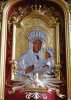

Roman Catholic
St Sigismund parish
05-507 Słomczyn
85 Wiślana Str.
Konstancin deanery
Warsaw archdiocese, Poland




full list:
displayClick to display full list

searchClick to search full list by categories
wyświetlKliknij by wyświetlić pełną listę po polsku

szukajKliknij by przeszukać listę wg kategorii po polsku

Martyrology of the clergy — Poland
XX century (1914 – 1989)
personal data


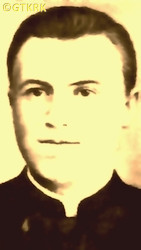

religious status
Servant of God
surname
DOMINIK
forename(s)
Constantine (pl. Konstantyn)


function
bishop
creed
Latin (Roman Catholic) Church RCmore on
en.wikipedia.org
[access: 2014.09.21]
diocese / province
Culm (Chełmno) diocesemore on
pl.wikipedia.org
[access: 2012.11.23]
honorary titles
Chapter's dean
(1928 – , Assumption of the Blessed Virgin Mary RC cathedral church, Pelplintoday: Pelplin gm., Tczew pov., Pomerania voiv., Poland
more on
en.wikipedia.org
[access: 2021.05.06])
Minor Canonmore on
en.wikipedia.org
[access: 2014.11.14]
(21.04.1920 – , Assumption of the Blessed Virgin Mary RC cathedral church, Pelplintoday: Pelplin gm., Tczew pov., Pomerania voiv., Poland
more on
en.wikipedia.org
[access: 2021.05.06])
„Polonia Restituta” Cross — 3rd Class, Commander'smore on
en.wikipedia.org
[access: 2019.04.16]
(09.11.1932)
date and place
of death
07.03.1942

Gdańsktoday: Gdańsk city pov., Pomerania voiv., Poland
more on
en.wikipedia.org
[access: 2021.07.04]
details of death
While studying at Germ. Königliches Katholisches Gymnasium (Eng. Royal Catholic Gymnasium) in Chełmno — during Prussian rule in part of partitioned Poland — member (1889‐1893) of the gymnasium chapter of a clandestine Polish self‐education Pomeranian Philomaths organisation. Participants met clandestinely in attics or private apartments, and in the summer by the Vistula River.
During ministry in Chełmno, supported the then‐organization of the Pomeranian Philomaths. Among other things, clandestine meetings were held at the Collegium Albertinum, where was a prefect. Taught himself Polish and Polish history clandestinely. One of his students recalled: „Most of the students living in the boarding school were Filaret members. The Prefect knew of the existence of the Philomaths organization and gave it his full support, supplying it with books and caring for our colleagues”.
On 09‐12.09.1901, was a witness at the trial of members of the Pomeranian Philomaths in Toruń, held by the Prussian authorities. Did not incriminate his students. When asked whether members of the association could swear on a crucifix, is said to have said: „It can happen, although it shouldn't”.
Also later, when ministered as vice‐rector at the Pelplin Theological Seminary, secretly taught, in addition to other subjects, Polish history and literature.
After German and Russian invasion of Poland in 09.1939 and start of the World War II, after start of the German occupation, administered his diocese from 09.1939 till 12.1939. The Germans closed down the building of the Diocesan Curia in Pelpin and sealed it. Closed also the Bishop's Palace. Robbed the diocesan treasury. In front of the seminary building set up a pole with the flag of the German National Socialist Party, i.e., the swastika.
In 10.1939 interned by the Germans in Pelplin.
On 31.01.1940 transferred to Gdańsk.
Because of severe illness was placed in the hospital and then in a Elisabethan sisters' monastery in Gdańsk.
All his contacts with external world were vetted by the Germans, had ban imposed and had to remain in Gdańsk.
Many times was interrogated, the last time in 02.1942.
Was given an ultimatum: either signature and access to the Germ. Deutsche Volksliste DVL — the German nationality list introduced by the Germans on 02.09.1940, which was a condition for recognition of belonging to the German nation — or death.
Refused to sign.
Passed away in Mary's hospital in Gdańsk before the ultimatum expired.
cause of death
extermination
perpetrators
Germans
sites and events
«Intelligenzaktion»Click to display the description, Ribbentrop‐MolotovClick to display the description, Pius XI's encyclicalsClick to display the description, Pomeranian PhilomathsClick to display the description
date and place
of birth
07.11.1870

Gnieżdżewotoday: Puck gm., Puck pov., Pomerania voiv., Poland
more on
en.wikipedia.org
[access: 2022.01.28]
parents
DOMINIK Michael Francis
🞲 18.12.1839, Werbliniatoday: Puck gm., Puck pov., Pomerania voiv., Poland
more on
en.wikipedia.org
[access: 2025.08.19] — 🕆 30.07.1896, Gnieżdżewotoday: Puck gm., Puck pov., Pomerania voiv., Poland
more on
en.wikipedia.org
[access: 2022.01.28]

DERC Anne Julianna
🞲 16.04.1846, Gnieżdżewotoday: Puck gm., Puck pov., Pomerania voiv., Poland
more on
en.wikipedia.org
[access: 2022.01.28] — 🕆 1872, Gnieżdżewotoday: Puck gm., Puck pov., Pomerania voiv., Poland
more on
en.wikipedia.org
[access: 2022.01.28]
baptism
13.11.1870

Swarzewotoday: Puck gm., Puck pov., Pomerania voiv., Poland
more on
en.wikipedia.org
[access: 2021.03.16]
Nativity of the Blessed Virgin Mary RC church
presbyter (holy orders)
ordination
25.03.1897

Pelplintoday: Pelplin gm., Tczew pov., Pomerania voiv., Poland
more on
en.wikipedia.org
[access: 2021.05.06]
St Barbara RC chapelmore on
pl.wikipedia.org
[access: 2021.12.19] (in Theological Seminary)
positions held
1928 – 1942
titular bishop — Athribis RC diocese — appointment: on 20.01.1928; ordination: on 25.03.1928
1928 – 1942
auxiliary bishop (Lat. episcopus auxiliaris) — Pelplin RC diocese — appointment: on 20.01.1928; also: from 04.1936 vicar general; till 1939 director of the Diocesan Council of the Missionary Union of the Clergy; from about 1932 president of the diocesan Union of Charitable Societies „Caritas”; from 1932 first referent of the Diocesan Curia; from 1934 censor of religious books; 1933‐1937 director of the diocesan Missionary Works; 1931‐1936 national director of the „Apostolic Union of the Clergy”
21.04.1920 – 1939
Minor Canon — Pelplintoday: Pelplin gm., Tczew pov., Pomerania voiv., Poland
more on
en.wikipedia.org
[access: 2021.05.06] ⋄ Cathedral Chapter ⋄ Assumption of the Blessed Virgin Mary RC cathedral church — from 1928 dean of the Cathedral Chapter
1920 – 1939
rector — Pelplintoday: Pelplin gm., Tczew pov., Pomerania voiv., Poland
more on
en.wikipedia.org
[access: 2021.05.06] ⋄ Theological Seminary — also: till 1926 vice‐rector and spiritual father; from 1926 director of the Brotherhood of the Blessed Sacrament and the Care of Poor Churches; from 1922 member of the Diocesan Council of Missionary Works; consultor of the Diocesan Curia in Pelplin, pro‐synodal examiner; diocesan director of the „Apostolic Union of the Clergy”
c. 1911 – c. 1928
pro‐synodal judge — Pelplintoday: Pelplin gm., Tczew pov., Pomerania voiv., Poland
more on
en.wikipedia.org
[access: 2021.05.06] ⋄ Bishop's Diocesan Court
06.05.1911 – 1920
vice–rector — Pelplintoday: Pelplin gm., Tczew pov., Pomerania voiv., Poland
more on
en.wikipedia.org
[access: 2021.05.06] ⋄ Theological Seminary — spiritual father and lecturer in liturgy, homiletics, pastoral theology, Polish literature and Polish history
17.11.1898 – 04.1911
chaplain — Chełmnotoday: Chełmno urban gm., Chełmno pov., Kuyavia‐Pomerania voiv., Poland
more on
en.wikipedia.org
[access: 2021.07.25] ⋄ Congregation's house and hospital, Daughters of Charity FdlC ⋄ St John the Baptist and St John the Evangelist RC church ⋄ Assumption of the Blessed Virgin Mary RC parish ⋄ Chełmnotoday: Chełmno urban gm., Chełmno pov., Kuyavia‐Pomerania voiv., Poland
more on
en.wikipedia.org
[access: 2021.07.25] RC deanery — also: prefect of the Germ. Höhere Mädchenschule (Eng. Lyceum for Girls); 1900–1911 prefect of the Collegium Albertinum boarding school for upper–grade gymnasium students
1897 – 1898
vicar — Gdańskhistorical area of Stare Szkoty
today: Gdańsk city pov., Pomerania voiv., Poland
more on
en.wikipedia.org
[access: 2021.07.04] ⋄ St Ignatius Loyola RC parish ⋄ Gdańsk Ideanery name
today: Gdańsk city pov., Pomerania voiv., Poland
more on
en.wikipedia.org
[access: 2021.07.04] RC deanery
17.04.1893 – 1897
student — Pelplintoday: Pelplin gm., Tczew pov., Pomerania voiv., Poland
more on
en.wikipedia.org
[access: 2021.05.06] ⋄ philosophy and theology, Theological Seminary
1889 – 1893
pupil — Chełmnotoday: Chełmno urban gm., Chełmno pov., Kuyavia‐Pomerania voiv., Poland
more on
en.wikipedia.org
[access: 2021.07.25] ⋄ Germ. Königliche Katholische Gymnasium (Eng. Royal Catholic Gymnasium) — studies completed on c. 10.03.1893 with the maturity diploma (i.e. matura)
1882 – 1889
pupil — Pelplintoday: Pelplin gm., Tczew pov., Pomerania voiv., Poland
more on
en.wikipedia.org
[access: 2021.05.06] ⋄ „Collegium Marianum” progymnasium
pupil — Gnieżdżewotoday: Puck gm., Puck pov., Pomerania voiv., Poland
more on
en.wikipedia.org
[access: 2022.01.28] ⋄ elementary school
1899 – 1942
membership — Toruńtoday: Toruń city pov., Kuyavia‐Pomerania voiv., Poland
more on
en.wikipedia.org
[access: 2021.06.20] ⋄ scientific society
sites and events
descriptions
«Intelligenzaktion»: German: «Intelligenzaktion» (English: „Intelligence Action”) — a German program of extermination of the Polish elite, mainly the intelligentsia and leadership layers, carried out from the beginning of the occupation in w 09.1939 to 04.1940, mainly in territories directly annexed to Germany, but also in the so‐called Germ. Generalgouvernement (Eng. General Governorate), where it was called «AB‐aktion». In the first phase, immediately after the beginning of the German occupation, during military operations carried out by the Germ. Wehrmacht (Eng. Armed Forces) and the genocidal units of the Germ. Einsatzgruppen (Eng. Operational Groups) of the Germ. Sicherheitspolizei (Eng. Security Police), i.e. SiPo, and Germ. Sicherheitsdienst des Reichsführers SS (Eng. Security Service of the Reichsführer SS), i.e. SD, organized by the Germ. Reichssicherheitshauptamt (Eng. Reich Main Security Office), i.e. RSHA, which followed the troops, carried out under the Germ. Unternehmen „Tannenberg” (Eng. Operation „Tannenberg”) — based on the so‐called Germ. Sonderfahndungsliste (Eng. Special Wanted Lists), i.e. proscription lists of Poles considered particularly dangerous to the Third Reich, prepared by the Zentralstelle II/P (Polen) unit of the German RSHA. Later, implemented by the German civilian occupation authorities and the genocidal unit of the Germ. Volksdeutscher Selbstschutz (Eng. Ethnic Germans Self‐Defense), whose members were Germ. Volksdeutsche (Eng. Ethnic Germans), i.e. representatives of the German minority in Poland. According to various sources, these lists, at the beginning of 09.1939, could have contained the details of 61,000—88,000 „dangerous” Poles — although these figures cannot be confirmed. In total, during this genocide, c. 50,000 teachers, Catholic priests, representatives of the landed gentry, freelancers, social and political activists, and retired military personnel were systematically and methodically murdered. Another 50,000 were sent to concentration camps, where only a negligible percentage survived. (more on: en.wikipedia.orgClick to attempt to display webpage
[access: 2014.10.04])
Ribbentrop‐Molotov: Genocidal Russian‐German alliance pact between Russian leader Joseph Stalin and German leader Adolf Hitler signed on 23.08.1939 in Moscow by respective foreign ministers, Mr. Vyacheslav Molotov for Russia and Joachim von Ribbentrop for Germany. The pact sanctioned and was the direct cause of joint Russian and German invasion of Poland and the outbreak of the World War II in 09.1939. In a political sense, the pact was an attempt to restore the status quo ante before 1914, with one exception, namely the „commercial” exchange of the so‐called „Kingdom of Poland”, which in 1914 was part of the Russian Empire, fore Eastern Galicia (today's western Ukraine), in 1914 belonging to the Austro‐Hungarian Empire. Galicia, including Lviv, was to be taken over by the Russians, the „Kingdom of Poland” — under the name of the General Governorate — Germany. The resultant „war was one of the greatest calamities and dramas of humanity in history, for two atheistic and anti‐Christian ideologies — national and international socialism — rejected God and His fifth Decalogue commandment: Thou shall not kill!” (Abp Stanislav Gądecki, 01.09.2019). The decisions taken — backed up by the betrayal of the formal allies of Poland, France and Germany, which on 12.09.1939, at a joint conference in Abbeville, decided not to provide aid to attacked Poland and not to take military action against Germany (a clear breach of treaty obligations with Poland) — were on 28.09.1939 slightly altered and made more precise when a treaty on „German‐Russian boundaries and friendship” was agreed by the same murderous signatories. One of its findings was establishment of spheres of influence in Central and Eastern Europe and in consequence IV partition of Poland. In one of its secret annexes agreed, that: „the Signatories will not tolerate on its respective territories any Polish propaganda that affects the territory of the other Side. On their respective territories they will suppress all such propaganda and inform each other of the measures taken to accomplish it”. The agreements resulted in a series of meeting between two genocidal organization representing both sides — German Gestapo and Russian NKVD when coordination of efforts to exterminate Polish intelligentsia and Polish leading classes (in Germany called «Intelligenzaktion», in Russia took the form of Katyń massacres) where discussed. Resulted in deaths of hundreds of thousands of Polish intelligentsia, including thousands of priests presented here, and tens of millions of ordinary people,. The results of this Russian‐German pact lasted till 1989 and are still in evidence even today. (more on: en.wikipedia.orgClick to attempt to display webpage
[access: 2015.09.30])
Pius XI's encyclicals: Facing the creation of two totalitarian systems in Europe, which seemed to compete with each other, though there were more similarities than contradictions between them, Pope Pius XI issued in 03.1937 (within 5 days) two encyclicals. In the „Mit brennender Sorge” (Eng. „With Burning Concern”) published on 14.03.1938, condemned the national socialism prevailing in Germany. The Pope wrote: „Whoever, following the old Germanic‐pre‐Christian beliefs, puts various impersonal fate in the place of a personal God, denies the wisdom of God and Providence […], whoever exalts earthly values: race or nation, or state, or state system, representatives of state power or other fundamental values of human society, […] and makes them the highest standard of all values, including religious ones, and idolizes them, this one […] is far from true faith in God and from a worldview corresponding to such faith”. On 19.03.1937, published „Divini Redemptoris” (Eng. „Divine Redeemer”), in which criticized Russian communism, dialectical materialism and the class struggle theory. The Pope wrote: „Communism deprives man of freedom, and therefore the spiritual basis of all life norms. It deprives the human person of all his dignity and any moral support with which he could resist the onslaught of blind passions […] This is the new gospel that Bolshevik and godless communism preaches as a message of salvation and redemption of humanity”… Pius XI demanded that the established human law be subjected to the natural law of God , recommended the implementation of the ideal of a Christian state and society, and called on Catholics to resist. Two years later, National Socialist Germany and Communist Russia came together and started World War II. (more on: www.vatican.vaClick to attempt to display webpage
[access: 2023.05.28], www.vatican.vaClick to attempt to display webpage
[access: 2023.05.28])
Pomeranian Philomaths: Secret societies of Polish youth, aiming at self‐education, patriotic in form and content, functioning 1830‐1920, mainly in secondary schools — gymnasia — in Pomerania around Vistula river (Gdańsk Pomerania and Chełmno county), in Prussian‐occupied Polish territories (one of the partitions of Poland). On 08.01.1901 Germans conducted a series of interrogations of students at Chełmno, Brodnica and Toruń gymnasiums. On 09‐12.09.1901 the first of court trials of Polish students from those gymnasiums and students of Theological Seminary in Pelplin was held in Toruń. 1 person was sentenced to 3 months in prison, 1 to 2 months, 3 to 6 weeks, 7 to 3 weeks, 2 to 2 weeks, 19 to a week, 2 to 1 day, 10 were reprimanded. 15 were cleared. More definitive penalties were relegations from the schools with so‐called wolf’s ticket, forbidding sentenced students to continue secondary and higher studies in Prussia (Germany). Among those penalized were a few future Catholic priests — those were able to continue their education for the Chełmno diocese bishop, Bp August Rosentreter, refused to relegate students from Theological Seminary. (more on: pl.wikipedia.orgClick to attempt to display webpage
[access: 2018.11.18])
sources
personal:
pl.wikipedia.orgClick to attempt to display webpage
[access: 2013.08.10], kaszubski.filmjezus.org.plClick to attempt to display webpage
[access: 2013.08.10], katecheza.diecezja-pelplin.plClick to attempt to display webpage
[access: 2025.08.19], www.naleik.nazwa.plClick to attempt to display webpage
[access: 2014.12.20]
original images:
pl.wikipedia.orgClick to attempt to display webpage
[access: 2015.09.30], www.parafiapierwoszyno.plClick to attempt to display webpage
[access: 2023.09.10], katecheza.diecezja-pelplin.plClick to attempt to display webpage
[access: 2025.08.19], pl.wikipedia.orgClick to attempt to display webpage
[access: 2014.01.16]


LETTER to CUSTODIAN/ADMINISTRATOR
If you have an Email client on your communicator/computer — such as Mozilla Thunderbird, Windows Mail or Microsoft Outlook, described at WikipediaPatrz:
en.wikipedia.org, among others — try the link below, please:
LETTER to CUSTODIAN/ADMINISTRATORClick and try to call your own Email client
If however you do not run such a client or the above link is not active please send an email to the Custodian/Administrator using your account — in your customary email/correspondence engine — at the following address:

giving the following as the subject:
MARTYROLOGY: DOMINIK Constantine
To return to the biography press below:
 Click to return to biography